Why is my MEPCO Bill So High?

If you live in South Punjab and receive electricity from MEPCO (Multan Electric Power Company), chances are you’ve wondered at least once, “Why is my MEPCO bill so high this month?”
Several factors contribute to a high MEPCO bill, including increased tariffs (fixed charges, FPA, and Quarterly Adjustments), increased electricity consumption, incorrect calculations or billing errors, exceeding your sanctioned load, a faulty meter (that was recently replaced), and seasonal factors.
In this article, I’ve compiled the common reasons for a MEPCO high electricity bill that will help you control usage and avoid unnecessary costs.
Please check your MEPCO bill online to confirm your current charges before applying the solutions.
1. High Energy Consumption at Home
The most common reason for a high MEPCO bill is that you use more electricity. As families grow larger and homes acquire more electrical appliances, the amount of energy they require increases, sometimes significantly.
When you use appliances that use a lot of electricity for a long time, the number of units (kWh) you use goes up a lot. Because MEPCO bills are based on slabs, even small increases in usage can move you up to a higher slab, which means your bill will be much higher.
If a family in Multan runs:
- 1 inverter AC (8 hrs/day): ~210 units/month
- Fans + LED bulbs: ~90 units/month
- Old refrigerator: ~150 units/month
- Washing + ironing: ~60 units/month
- Other devices: ~45 units/month
Total = ~555 units/month
Since this crosses into MEPCO’s highest tariff slab, most units are billed at a much higher rate. That’s why their bill can jump from around Rs. 6,000 (low slab) to Rs. 15,000+ in a single month.
Solution: Switch to energy-effecient appliances and turn-off when not in use.
2. Slab System of MEPCO Tariffs
The National Electric Power Regulatory Authority (NEPRA) defines the MEPCO slab system, a tariff structure that charges residential or household consumers differently based on their monthly electricity consumption.
For example:
- 1–100 units = charged at the lowest rate.
- 101–200 units = slightly higher rate.
- 201–300 units and above = significantly higher rate.
The more units you consume, the higher the rate per unit becomes. This means that even using just a little extra electricity can push your bill into the next slab, making it much higher than expected. These are subject to change, which is why I advise keeping an eye on updated slab rates.
3. Fuel Price Adjustments (FPA) and Surcharges
FYI, electricity in Pakistan is produced using different fuels like furnace oil, coal, natural gas, and hydropower. When the cost of fuel rises in the internal market, NEPRA allows DISCOs (such as MEPCO) to add an extra charge to your bill, called FPA.
Added FPA and extra charges are another reason for a high MEPCO bill, even when you use the same number of units per month. This adjustment can add anywhere from Rs. 3–12 per unit.
For a household using 500 units, that could mean an extra Rs. 2,500–6,000, without consuming a single additional unit.
Additional charges include:
- GST (General Sales Tax)
- Electricity Duty
- TV License Fee
- QTR Tariff Adjustment
This is something you can’t control!
Interestingly, FPA is usually charged 2-3 months after the event. For example, if fuel costs went up in June, you may see the FPA added to your August bill.
It’s a smart move to keep an eye on FPA updates so you can manage your electricity usage accordingly.
4. Peak Hour Usage
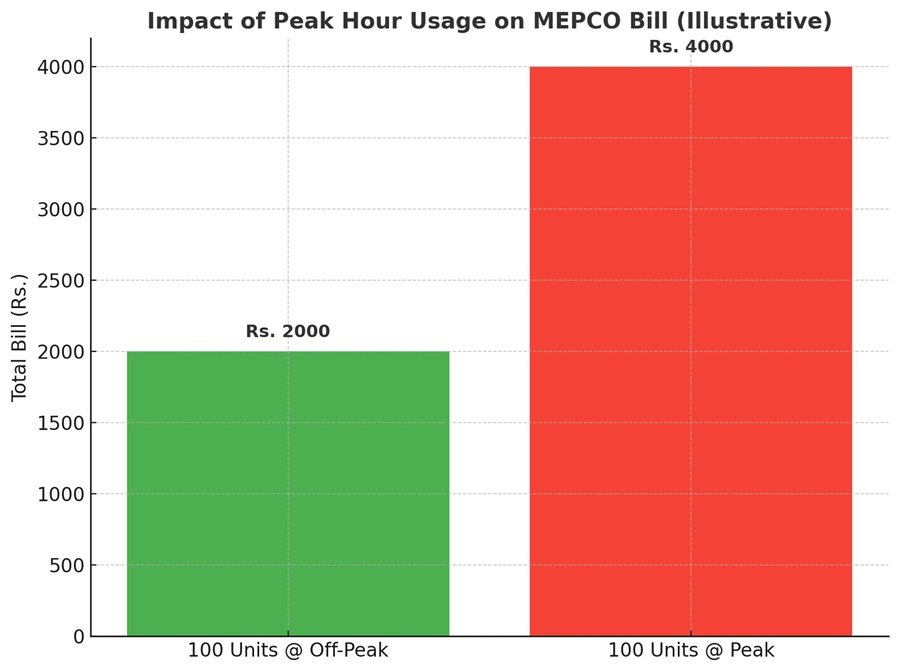
Peak hours refer to the specific times of the day when electricity demand in Pakistan reaches its highest levels. And they are a silent booster to your MEPCO bill, as consuming electricity specifically during these hours can result in a 20-30% increase in your monthly bill for the same units (consumed in off-peak hours).
According to NEPRA/MEPCO’s current structure (may vary slightly):
- Peak Hours: 6:30 PM – 10:30 PM
- Off-Peak Hours: All other times of the day and night
How to Save on Peak Hour Usage:
- Run heavy appliances at night or early morning (off-peak times).
- Pre-cool or pre-heat rooms before peak hours to minimize AC/heater use later.
- Batch your laundry/ironing and schedule it outside peak timings.
- Encourage family awareness so everyone avoids unnecessary peak-hour consumption.
5. Meter or Billing Issues
Another common reason for an unusually high MEPCO bill is an error in the meter reading. Most readings are conducted manually, and it is easy enough to make a mistake.
Even a small error in recording the numbers can result in extra units, leading to an inflated bill.
In some cases, it may not be a reading error but the meter that is malfunctioning.
A faulty meter that runs too fast will show higher consumption, when in reality, it’s not that high all of the time.
If you ever feel that the bill doesn’t match your usage, you should have the meter inspected by MEPCO officials so that you don’t end up paying more than your actual usage.
If you believe your bill is incorrect, you should contact MEPCO directly for correction. You can submit a complaint or request support through their official helpline. Contact MEPCO Helpline for quick assistance.
6. Old or Inefficient Appliances
Outdated air conditioners, freezers, and refrigerators work three to four times harder than new, energy-efficient appliances, which may increase expenses.
However, it’s not only aging appliances sucking your money out of your wallet. Some home appliances waste electricity by phantom load (or “vampire power”). Appliances like chargers, TVs, and microwaves keep drawing energy even when off but plugged into a socket. This wastage of energy tends to accumulate over time and increase your bill for a month.
Examples of appliances that waste extra electricity:
- Older models of refrigerators, freezers, and non-inverter air conditioners
- Tube lights and filament bulbs
- Chargers, set-top boxes, and microwaves on standby
- Desktop computers running all day.
7. Faulty Wiring or Leaks
Occasionally, the cause of your problem is related to the wiring inside your house, not your usage. The wires may be damaged or defective and could be leaking current outside your house, so basically, you are being charged for units you have never used.
These types of losses may not have alerted you, but they can significantly increase your monthly MEPCO bill.
A loose connection or old wire can occur and cause dissipation, overheating, and safety issues.
With so many things costing you energy, it’s a smart idea to check your entire electrical system regularly.
Check for any signs of problems, both with the wiring inside your home and the connections outside.
Why? Because, in combination with your utility company, detecting electrical problems early is the best approach to avoid those unexpectedly high bills, and even more critically, avoid damage to your home and property.
Common wiring-related issues to check:
- Old or damaged wires are causing line losses
- Loose connections in switches and sockets
- Overloaded circuits from too many appliances
- Poor-quality extensions or wiring joints
8. Seasonal Usage
The demand of applianced changes with weather and this directly impacts how many units you consume each month.
During Summer:
Running ACs for several hours a day is the biggest contributor to high bills. Similarly, refrigerators and freezers work harder in the summer.
Impact: A household using 300 units in spring might easily reach 600+ units in peak summer, pushing them into the highest MEPCO slab.
During Winter:
Electric heaters and geyser consume 2-3 hours per day or even for long hours depending on the usage.
Impact: Even without ACs, bills rise due to heaters and geysers. A family may jump from 200 units in October to 500+ units in December.
What you Can Do?
How you consume the electricity makes a big impact in the monthly MEPCO bill. I got the highest bill of my life in September, 2025 which affected financially. However, I made certain changes and adviced my family to do these changes to reduce the MEPCO bill.
- Check your units on the bill vs. your meter reading to ensure accuracy.
- Use MEPCO online bill calculator to confirm charges.
- Shift appliance use to off-peak hours if you’re on TOU (Time-of-Use) meter.
- Use AC at 26–27°C and limit running hours.
- Replace old appliances with inverter/energy-efficient models.
- Monitor consumption daily/weekly so you notice changes early.
- If you suspect overbilling, file a complaint at the MEPCO office with your meter reading photos.
- Regularly service appliances so they run efficiently in extreme weather.
- Stay below slab limits.
ALSO READ:

Syed Burhan Shah Bukhari
Author
Syed Burhan Shah Bukhari combines his expertise in technology and practical problem-solving. He writes insightful guides and tips to help users manage their electricity bills efficiently. Burhan also develops tools that make online bill payments and account management simpler and more accessible. His mission is to bridge the gap between technology and everyday convenience for all MEPCO users.